
AEO / GEO platform
Track Your Visibility Across AI Answers, Then Act on It
EarShots builds an agentic AEO / GEO prompt universe to explore new prompts across your category, grounded in real user questions, product friction, and buying signals. Track your visibility, mention rate, and citation share across the prompts your market actually runs, then secure AEO citations directly in the articles feeding those answers.
Visibility
58%
+6 pts in 30 days
Share of voice
34%
vs 3 tracked competitors
Average position
#1.8
1,120 answers read
Visibility by engine
Brand ranking
| Brand | Visibility | Position |
|---|---|---|
| NorthwindYOU | 58% | #1.8 |
| Pellucid | 51% | #2.1 |
| Stackhaven | 37% | #2.9 |
| Quarry | 22% | #3.4 |
Top sources
| Domain | Answers cited in | Type |
|---|---|---|
| github.com | 64% | Community |
| northwind docs | 41% | You |
| stackoverflow.com | 33% | Community |
| pellucid docs | 29% | Competitor |
Tracked prompts
| Prompt | Engines mentioning you | Rank score |
|---|---|---|
| best open source vector database for rag | 4 of 4 | 82/100 |
| how to add semantic search to postgres | 3 of 4 | 64/100 |
| pinecone alternatives self hosted | 2 of 4 | 41/100 |
| fastest embeddings store for edge functions | 1 of 4 | 12/100 |
- Engines tracked
- 4
- Starter prompts
- 100
- Growth prompts
- 250
Use cases
The AEO platform for dev tool companies, SaaS and AI startups.
Each market asks AI different questions and trusts different sources. Pick yours to see the prompts, sources and next steps EarShots tracks.
AEO for dev tools
Developers and coding agents ask AI which library, database or CLI to install. EarShots tracks those prompts on ChatGPT, Claude, Gemini and Google AI Overviews, shows which docs, repos and threads get cited, and drafts replies where developers are already asking.
- 01
Track install-time prompts
Start from real questions in GitHub issues, Reddit and Hacker News, not keyword lists.
- 02
Fix the source the engine reads
See when an engine cites an old benchmark or a stale README instead of your docs.
- 03
Answer in the thread
Ears drafts a reply grounded in your docs. Your team reviews and posts it.
AEO for SaaS
SaaS buyers ask AI to shortlist vendors and compare them. EarShots shows where you land in those shortlists, which competitors are named ahead of you, and which review sites and roundups the engines quote.
- 01
Map the shortlist prompts
Track "best", "vs" and "alternatives" prompts for your category, by engine.
- 02
See who displaces you
Competitors named, their position, and the pages cited instead of yours.
- 03
Get into the roundups
Ears Cite reaches the authors of the articles engines already quote.
AEO for startups
New categories get defined in AI answers before the market settles. EarShots helps AI startups find the prompts nobody owns yet, see the follow-up searches each engine runs, and get named before incumbents catch up.
- 01
Find open prompts
Prompts where no product is named consistently are the cheapest to win.
- 02
Read the fan-out
See the follow-up searches an engine runs, so your pages answer them too.
- 03
Turn launch noise into citations
Listening catches early conversations. Ears drafts replies for your approval.
Prompt Universe
Score your tracked prompts. Source new ones from millions.
Every prompt you track gets an optimization score built from how often AI answers mention you, how often they cite your sources, and where you rank when they do. Low scores with high buyer intent rise to the top, so your team always knows which prompt to work on next.
Your tracked list is the start. The Prompt Universe maps millions of real prompts across your whole category, grounded in the user questions, product friction, and buying signals Ears hears every day in AI prompt queries and public threads. Connect Google Search Console and Google Analytics and it adds the searches already bringing buyers to your site. You see the demand in your category before your competitors do, and you choose which prompts to own.
- Engines tracked
- 4
- Prompts in the universe
- Millions
- Grounded in
- Real demand
- Score per prompt
- 0 to 100
Tracked prompt
best open source vector database for rag
Discovered from your ICP
3 new this weekvector database with builtin rbac for enterprise
AI prompt queries · Rising
migrate from pinecone to self hosted postgres
Google Search Console · Steady
cheapest embedding storage for a side project
Reddit threads · Rising
Agentic AEO
The agentic AEO platform, grounded in real prompts
EarShots gives your agents the same AEO data your team sees. Track, analyze and act on the prompts your customers actually enter into ChatGPT, Claude, Gemini and Google AI Overviews, from MCP, the REST API or the CLI.
- 01
Ground
Prompts come from your docs, real community conversations about your product and AI search volume data, not guesses.
- 02
Measure
Each prompt runs on ChatGPT, Claude, Gemini and Google AI Overviews. Your agent reads who was named, who was cited, and why.
- 03
Analyze
Ask your agent which prompts you lose, which sources engines trust instead of you, and what to fix first.
- 04
Act
Recommendations and drafts stay drafts until a person approves them. Agents never post on your behalf.
Agents: get started in 3 minutes
Same setup for a two-person startup or an enterprise team. Connect, propose, track.
# For AI agents: set up EarShots AEO
1. Connect the EarShots MCP server
2. aeo_get_profile        -> workspace and competitors
3. aeo_propose_universe   -> dry run, no prompts created
4. aeo_apply_universe     -> track the approved proposal
5. aeo_get_share_of_voice -> per-engine resultsMCP
Connect Claude, Cursor or any MCP client. Your agent proposes a prompt universe and reads every engine's answers, citations and fan-outs.
MCP docsREST API
Pull AEO data into your warehouse, dashboards or internal agents with a scoped workspace key, and subscribe to webhooks when new answers land.
REST API docsCLI
Sign in from the terminal your coding agent already uses, and work your mentions and drafts next to your code.
CLI docs
Close the loop
Tracking shows the gap. Ears Cite closes it.
AI answers lean on a short list of articles. Ears Cite is managed outreach to the people who wrote them, asking to include your product where it fits. You never write or review an email.
See how Ears Cite works- 01
Measure
Prompt Universe shows the articles AI engines cite for your prompts.
- 02
Reach
Ears Cite contacts the named authors of those articles.
- 03
Cited
An approved author adds your product within 72 hours.
Citation requests
Prompt
best vector database for agent memory
Best vector databases for agent memory
Northwind Engineering
Started Oct 6Approved Oct 14Choosing a cache for LLM workloads
Field Notes on Infra
Started Oct 9Approved Oct 20Self-hosted search engines compared
The Ops Ledger
Started Oct 17Waiting on author
AEO research
Learn how answer engines choose sources
Our published guides on prompts, citations, query fan-out and what Google says about AEO and GEO.
October 17, 2026 · 12 min read
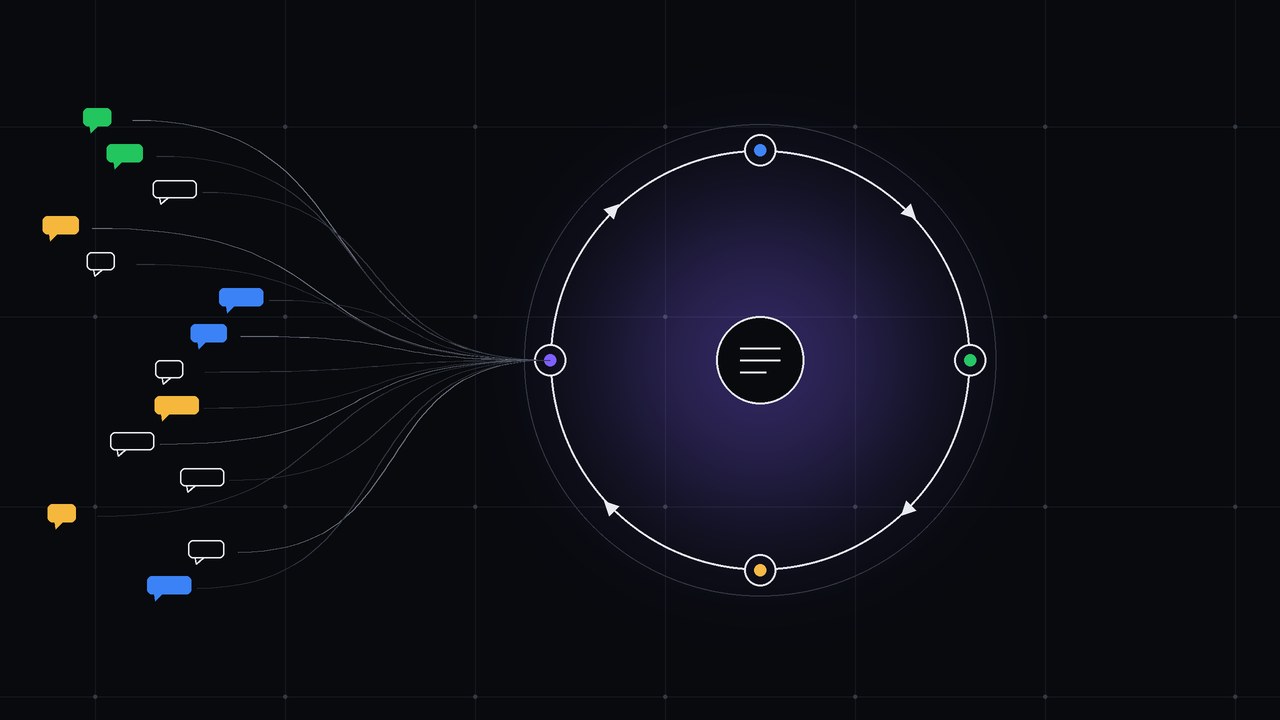
Answer engine optimization and developer social listening
Connect answer engine optimization with developer social listening. Compare citation research, review crawler access and measure product visibility accurately.
Read the guide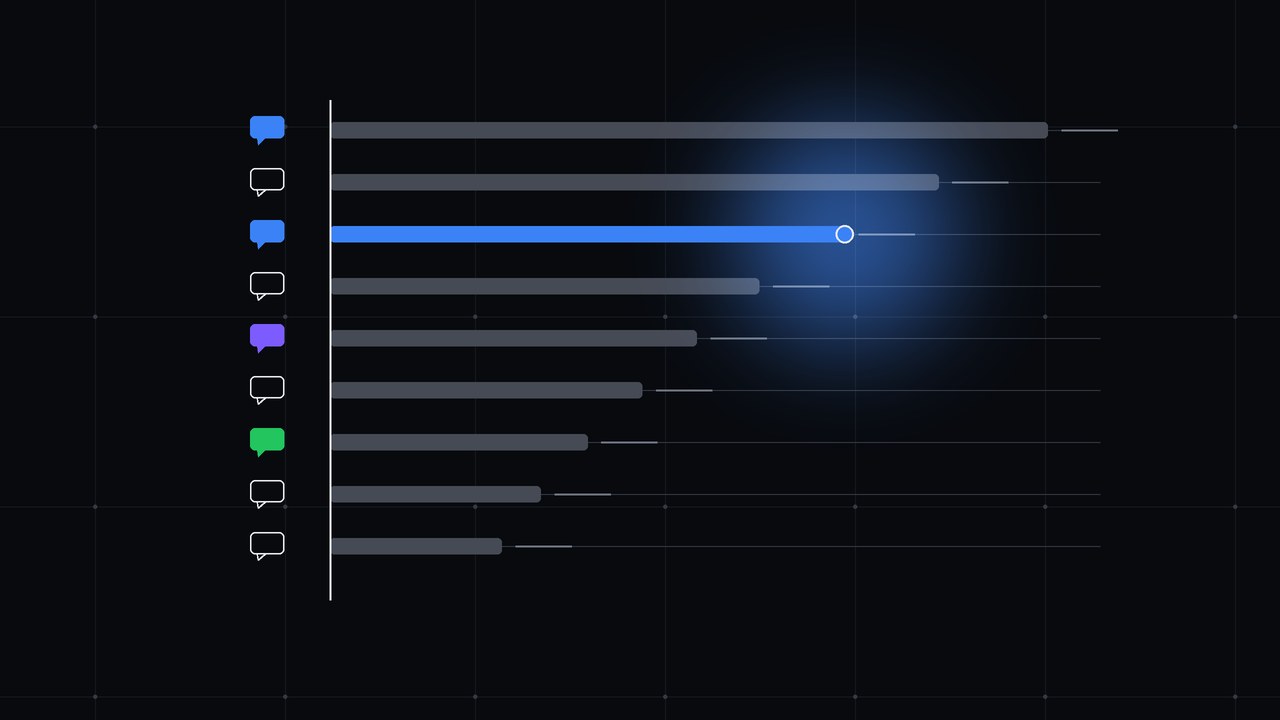
October 18, 2026 · 9 min read
Sources cited in AI answers about developer tools
Compare AI search citation studies without confusing total citation share with top-source share. Build a source audit for your developer-tool category.
Read the guide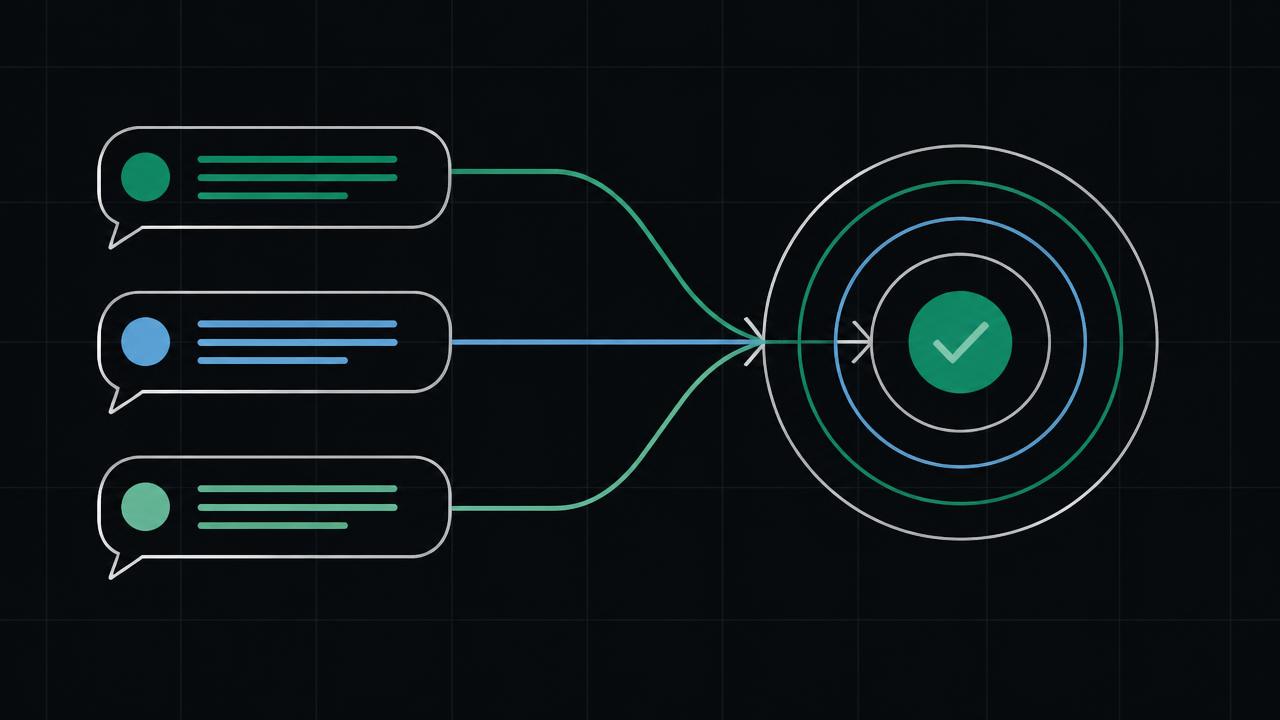
October 24, 2026 · 34 min read
How to choose prompts for an AI search strategy
Choose AI search prompts around customer decisions, map questions to supporting pages, and measure retrieval, citations and recommendations separately.
Read the guide
October 12, 2026 · 6 min read
Does Google require special AEO or GEO optimization?
Google requires no special AEO or GEO setup. Check indexing, improve technical answers, and add relevant schema without mistaking it for a citation guarantee.
Read the guide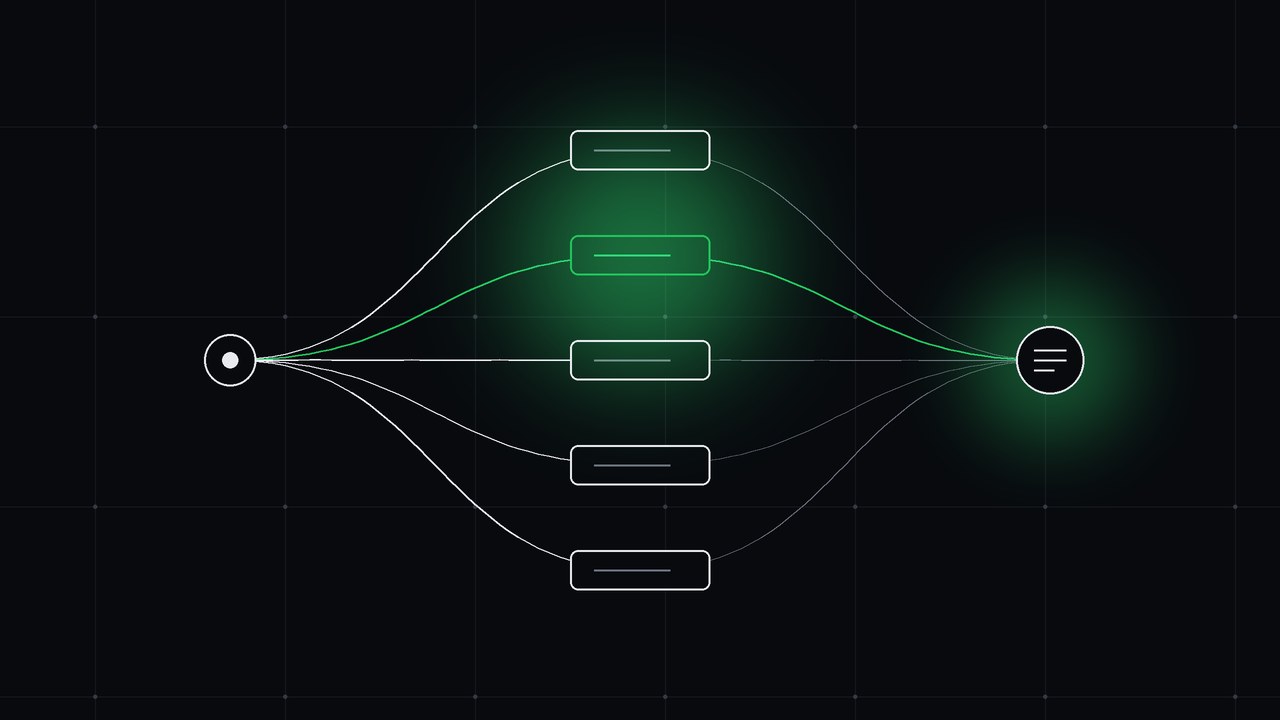
October 19, 2026 · 6 min read
Query fan-out, explained for developer questions
Google can expand one question into related searches. Learn what query fan-out means, how citation studies measure it and where the evidence is limited.
Read the guide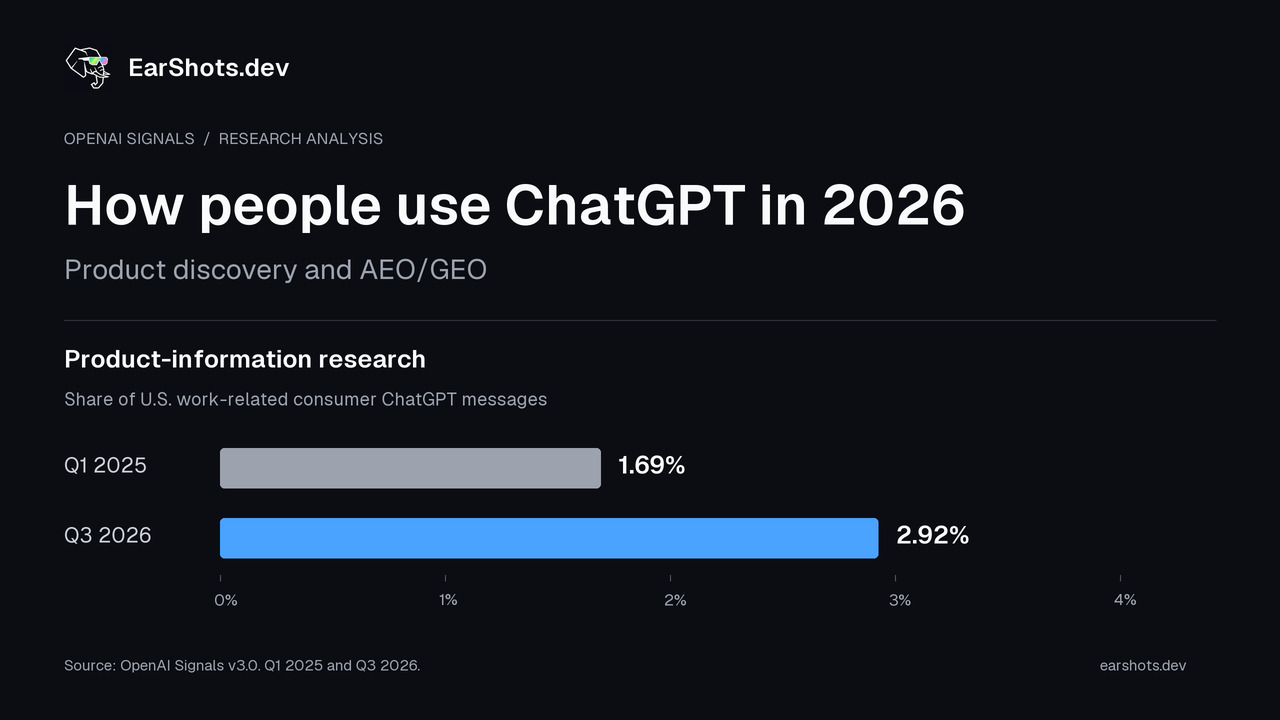
October 28, 2026 · 10 min read
How people use ChatGPT in 2026: implications for product discovery and AEO/GEO
OpenAI Signals shows a rising share of product-information research. See what the findings mean for AEO/GEO content, product fit and accurate AI answers.
Read the guideAEO / GEO terms to know
See all 112 terms- Answer engine optimization
- Answer engine optimization (AEO) is work to make information useful, accessible and accurate for search answers. Mentions and citations can be measured, but are not guaranteed.
- Generative engine optimization
- GEO is the same goal framed around generative search: making your pages easy for a model to retrieve, trust and quote.
- Query fan-out
- When an AI engine splits one prompt into several related searches and combines the results into a single answer.
- Cited source
- A page an AI answer links to or draws from when it names a product.
Act on it
Know what to fix for each prompt.
On any tracked prompt, EarShots reads the AI answers, who gets mentioned and cited, and what your docs cover, then gives recommendations to win that prompt. EarShots drafts replies on X, LinkedIn and Reddit for your approval.
FAQ
Common questions
What is agentic AEO?
Agentic AEO means AI agents do the tracking and analysis work, not just dashboards. With EarShots, an agent connected over MCP, the REST API or the CLI can build your prompt universe, read every engine's answers and citations, and tell you which prompts to fix first. Recommendations and drafts stay drafts until a person approves them.
What is an AEO platform for dev tools?
An AEO (answer engine optimization) platform for dev tools tracks whether ChatGPT, Claude, Gemini and Google AI Overviews name and cite your library, API or CLI for the prompts developers and coding agents ask, and shows which docs, repos and threads those answers rely on.
How should a startup approach AEO?
Start with 20 to 50 prompts taken from real customer questions, track them on every engine, and work on the ones where no product is named consistently. Then get cited in the articles engines already quote, which is what Ears Cite does.
Which AI engines does Prompt Universe track?
ChatGPT with web search, Claude with web search, Gemini, and Google AI Overviews.
What is query fan-out and why does it matter for AEO?
When someone asks an AI engine one question, the engine often fans it out into several related searches before answering. EarShots shows you the fan-out queries behind each prompt, so you can see the full set of questions an engine researches and make sure your docs and sources cover them, not just the headline prompt.
What is the difference between AEO and GEO?
AEO (answer engine optimization) is about getting named in AI answers. GEO (generative engine optimization) is about getting your sources cited inside the generated answer itself. EarShots tracks both: mention rate tells you if you are named, citation share tells you if your pages are the source.
How do I get my product cited by ChatGPT and Claude?
Engines cite pages that already answer the question clearly: documentation, comparison articles and community threads. EarShots shows which sources each engine trusts for your prompts, and Ears Cite reaches out to the authors of the articles engines already quote to include your product where it fits.
How do I measure share of voice in AI answers?
Track a fixed set of prompts over time and compare how often each competitor is named and cited per engine. EarShots computes this automatically across your prompt universe, with trendlines per engine, so you can see whether your share is growing or a competitor is taking it.
How often do prompts refresh?
You choose daily or weekly for each prompt.
What is the difference between a mention and a citation?
A mention means the answer mentions your product. A citation means the answer links your site as a source. Both are tracked separately.
How many prompts can I track?
Starter tracks 100 and Growth tracks 250. Enterprise tracks prompts on credits, sized with the EarShots team for your volume.
Does EarShots publish anything to my docs?
No. EarShots never edits your site. It drafts replies on X, LinkedIn and Reddit for your approval, and gives recommendations for your docs.
Find out what AI tells your buyers
Add your docs address and the first prompts run the same day.